The Comfort Blanket That Costs: Rethinking Cash in a 2026 Portfolio
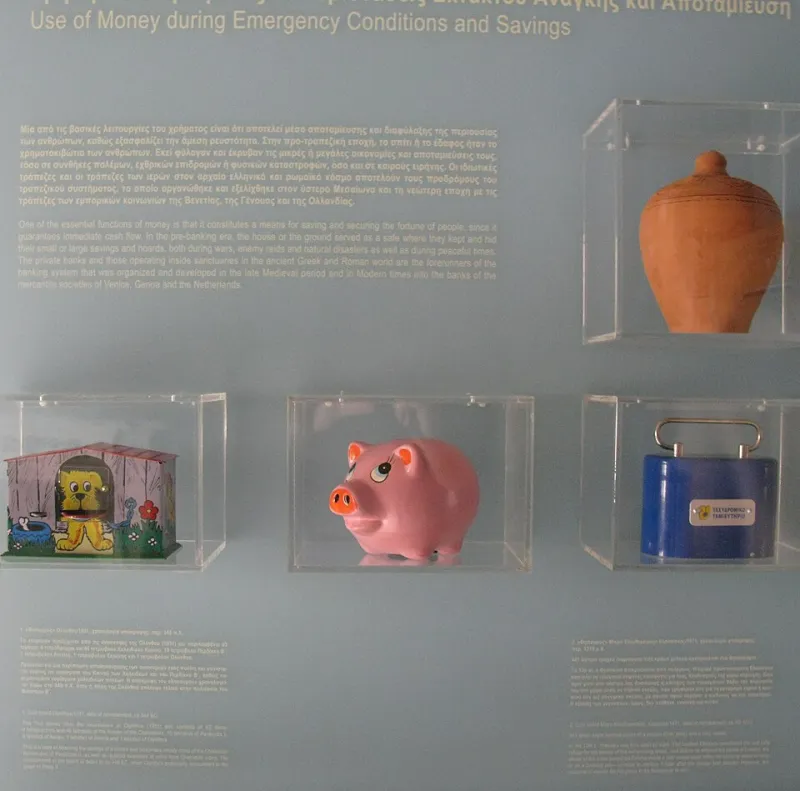
Photo: Tilemahos Efthimiadis from Athens, Greece, CC BY 2.0, via Wikimedia Commons
Cash is the asset investors love to hold and hate to question. It feels safe, liquid and simple. In a world of market volatility and political uncertainty, a healthy cash balance can look like prudence. The difficulty is that cash has a job, and once that job is done, holding more of it can quietly work against the goals it is meant to protect.
The quiet erosion of real value
Inflation is the invisible tax on cash. A balance that grows by 4% while prices rise by 4% has not grown at all in real terms; after tax, it may have shrunk. For much of the past decade, savings rates were far below inflation, and even in periods when rates improve, the gap between cash returns and long-term investment returns can be substantial. The risk is easy to ignore because it does not appear on a statement as a loss. It appears as purchasing power that buys less than expected.
How much cash is enough?
The standard answer is three to six months of essential spending. That is a starting point, not a rule. A household with two stable incomes and no dependants may need less. A self-employed worker, a single parent or a family with a single income may need more. The buffer should cover mortgage or rent, utilities, food, transport, insurance and debt payments. It should not be based on total spending, which includes discretionary items that can be cut in a crisis.
It also helps to separate the emergency fund from money needed for known short-term goals. A deposit for a house in 18 months and a rainy-day reserve are different pots with different time horizons. Mixing them can lead to either too much cash or too little.
Where the buffer should live
The emergency fund should be accessible, stable and protected. Easy-access savings accounts, cash ISAs and Premium Bonds are common choices. Cash ISAs offer tax-free interest, while savings accounts may pay higher rates for a fixed term. Premium Bonds offer capital safety and a chance of prizes, but returns are not guaranteed. For larger balances, it is worth checking protection limits. The Financial Services Compensation Scheme covers £85,000 per person per eligible bank, or £170,000 for a joint account.
Offset mortgages can also serve as a cash buffer for homeowners, because savings reduce the interest charged on the loan. The trade-off is that the money is not as liquid as a separate account unless the lender allows withdrawals.
When excess cash becomes an investment decision
Once the emergency fund and near-term goals are covered, additional cash is long-term capital. That is when the question changes from safety to opportunity. Money that will not be needed for at least five years may be better suited to a diversified investment portfolio, held inside a stocks and shares ISA or a pension where the tax treatment is favourable.
Investing does not mean taking reckless risk. It means matching the asset to the time horizon. Money needed in 12 to 24 months should generally stay in cash or near-cash. Money intended for retirement or a long-term goal can tolerate more volatility in exchange for higher expected returns. Pound-cost averaging, where contributions are spread over time, can reduce the risk of investing a lump sum at an unfortunate moment, but it does not remove market risk.
The behavioural trap
Cash feels safe because it does not show volatility. Investors can check the balance without seeing a fall in capital value. But inflation risk is silent. A portfolio that is 60% cash may feel conservative while actually exposing the owner to a slow loss of purchasing power. The behavioural challenge is to make that invisible risk visible, for example by reviewing real returns annually rather than just the nominal balance.
Putting the cushion to work without losing sleep
A practical approach is to set a cash ceiling. Decide how many months of spending the buffer should cover, hold that amount in accessible accounts and direct any excess to longer-term savings. Review the limit once a year or after a major change in income, spending or family circumstances. Keep the emergency fund separate from investment accounts so that a market fall does not tempt you to raid the buffer.
At Asset Grove, the principle is not to maximise risk but to match assets to liabilities. Cash should be the foundation of a financial plan, not the whole structure. Held in the right amount and in the right place, it provides security. Held in excess, it becomes a comfortable way to fall behind.